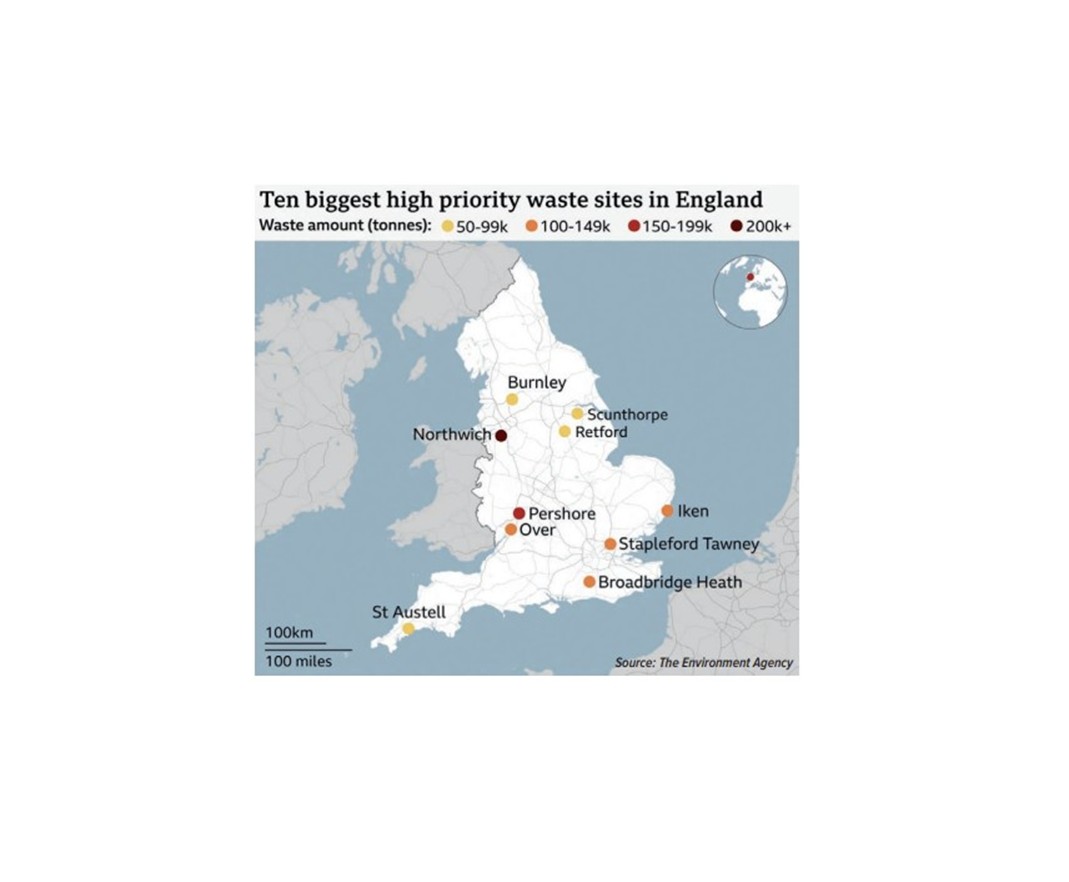
The EA recently reported “there are currently around 700 known illegal waste sites across England”, but some independent research suggests the actual scale of illegal waste activity could be significantly larger, with thousands of sites potentially remaining unreported. While the 117 sites listed in the new document appear to represent a small part of England’s wider waste issues, it’s also important to note that the list is not limited to illegal sites, it can include locations under investigation, permitted facilities with ongoing concerns, and sites linked to legacy environmental issues.
The document lists waste sites by Site Name, Site location, Waste Type and Waste Amount (tonnes), with the site name generally matching the location. The scale of some of the sites involved is interesting, with reported tonnages ranging from just one tonne to 281,000 tonnes.
The list identifies sites that are currently causing concern to local communities or are considered a priority for regulatory attention. While the EA has noted that inclusion on the list does not automatically mean illegal activity is taking place, publishing the document does shine a spotlight on the sites that can be identified by their generic location. The EA has stated that investigations are ongoing and that the courts ultimately determine whether illegal activity has taken place.
Residents living near illegal or problematic waste sites can be affected by noise, odour, dust, fire risks, visual impacts, or fears around pollution, and have regularly hit a wall with how long enforcement can take. The EA appears to be responding to those concerns by increasing visibility around where it is actively focusing resources and encouraging local reporting of suspected waste crime (which we are pleased to see). The EA has also confirmed the watchlist will be updated monthly as investigations evolve.
The big question is what happens next?
Will the publication of these sites lead to faster intervention and more decisive enforcement action?
Will some operators be supported back into compliance, or will the focus be on prosecution and closure?
For the list itself, will it continue to grow, or will we see some of these site issues resolved?
And, importantly, what role will compliance, planning, restoration/ redevelopment play in resolving some of the larger legacy sites?
What is clear is that scrutiny of waste activities appears to be increasing. For operators, maintaining strong environmental standards, robust documentation and proactive engagement with regulators is likely to become even more important in the months and years ahead.
The publication of this list is not just about highlighting sites, it reflects a broader but discreet shift in regulatory tone. The challenge now will be ensuring that enforcement is targeted effectively, communities are protected, and confidence in the wider waste sector is strengthened rather than undermined.