
As the resource management and circularity landscape continues to evolve under increasing environmental and regulatory scrutiny, the Washed Aggregates Trade Association (WATA UK) is positioning itself as a vital player in the journey toward a circular economy.
Founded by Andy Hill and James Verlaque to promote and support the recycled and washed aggregates sector, WATA has quickly become the industry’s trusted voice, advocating for sustainable practices, clearer regulations and increased governmental recognition.
MPG were delighted to have attended WATA’s March members meeting, where industry leaders, technical experts and regulators gathered to discuss progress and the challenges ahead in navigating industry hurdles. With membership growing and industry momentum building, the meeting really highlighted WATA’s mission to promote the environmental benefits of washed aggregates and ensure their key role in construction, recycling and the circular economy.
WATA is focused on advocacy as its core priority. A market study now estimates that the UK produces over 20 million tonnes of washed, recycled aggregates annually, which is a clear sign of the sector’s significance. However, awareness and support of this at the government level remain limited.
To address this, WATA is advocating increased government recognition of the contribution of washed aggregates to carbon reduction, material supply and infrastructure development, as well as improved environmental standards. Ongoing political engagement includes mapping key stakeholders, meeting with MPs and contributing to consultations aimed at modernising the permitting processes and waste categorisation. WATA is also working closely with other industry bodies, including the British Aggregates Association, to challenge outdated interpretations of waste codes and respond to the Government on subjects such as the recent Landfill Tax consultation. This collaboration has led to the formation of technical, legal and educational working groups to engage with regulators such as HMRC and the Environment Agency (EA).
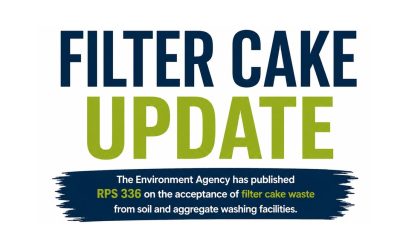
One of the sector’s most pressing technical challenges is the classification and treatment of filtercake. WATA’s Technical Committee is exploring the rebranding of this material as ‘Residual Mineral Product’ to move away from the waste stigma. Trials are underway to evaluate its potential as an alternative raw material in cement production. A shift (and consistency) in terminology and classification could unlock new avenues for reuse and reduce regulatory burdens.
Meanwhile, the Environment Agency’s recent stance treating filtercake as effluent sludge poses serious operational and financial questions for many operators. WATA is advocating a more proportionate, evidence-based approach that aligns with the actual material characteristics and reuse potential.
WATA members were also briefed on the recent changes to Standard Rules Environmental Permits and upcoming changes to waste exemptions. Operators are urged to assess their permits now, as by 27th June, those not complying with the new Standard Rules will need to apply for bespoke permits. This evolving landscape highlights the importance of WATA’s role in guiding its members through complex compliance processes.
With confirmed participation at this year’s RWM Expo, a growing list of members from across the UK and a busy schedule of stakeholder meetings, WATA is steadily amplifying the much-overlooked voice of recycled aggregate producers. For an industry poised to support net zero goals and circular economy ambitions, WATA is proving essential in providing a voice for the recycled aggregates industry.
To learn more or become a member, visit www.watauk.co.uk