
Wash water management is a critical component of aggregate recycling and wash plant operations, underpinning both environmental protection and operational efficiency. As wash plants continue to grow in scale and complexity, the ability to control, recycle and monitor wash water has become central to regulatory permitting and compliance, cost control, sustainability and the production of high-quality recycled aggregates.
Aggregate washing uses significant volumes of water to remove silt, clay, and fine particles from construction, demolition, and excavation materials to create higher-quality products. Over the last few years, the EA have become increasingly concerned with the potential for this water to become contaminated and for pollutants to build up and concentrate within the recirculated water. Effective management of wash water is, therefore, essential.
Modern wash plants are typically designed as closed-loop water recirculation systems with external, sealed, impermeable surfacing and dedicated drainage infrastructure, so that all process water leaving the plant on products is either evaporated or flows to controlled collection points such as sumps, channels, or perimeter drains. This ensures there is no uncontrolled release to the surrounding environment, including nearby watercourses, drains, or groundwater.
Closed loop or near-closed loop systems, which continuously recycle and recirculate water, are now considered best practice. By recirculating the majority of the water used in the washing process, operators minimise the need for top-up from their water supply and significantly increase the sustainability of the operation. Losses still occur through evaporation, wet product, and filter cake, so reliable water-supply top-up measures remain necessary, but overall consumption is greatly reduced by this method.
Monitoring plays a central role in responsible wash water management. Routine and consistent visual checks ensure equipment is functioning correctly and that no leaks, blockages, or mechanical failures compromise containment. More formal laboratory testing of wash water quality allows operators to identify any build-up of contaminants within the recirculation. system. Parameters such as pH, suspended solids, hydrocarbons, chemical oxygen demand, and metals are commonly monitored to assess whether the water remains suitable for reuse and whether the flocculant is working effectively. If thresholds are exceeded, the system can be flushed and contaminated water removed from site for treatment at licensed facilities, preventing any long-term accumulation of harmful substances.
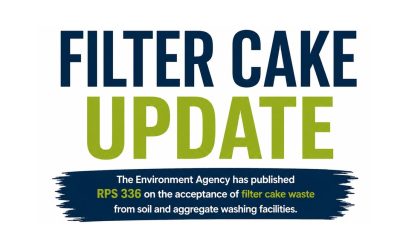
Managing sludge and filter cake is another important part of the process. Fines removed during washing are concentrated and dewatered, typically to around 15–20% moisture. This material must be stored on hardstanding and handled appropriately. In some cases, it can be reused. We would argue that the good-quality filter cake is currently being very much underused, but where disposal is required, it must be sent to a suitably authorised facility.
Ultimately, an effective wash water management system allows an aggregate recycling site to operate efficiently, safely and sustainably. It protects sensitive receptors, ensures compliance with environmental permits, reduces water consumption and supports the production of clean, high-quality recycled aggregates. As regulatory expectations increase, wash water management is not just a technical requirement, it is a fundamental part of responsible resource recovery.