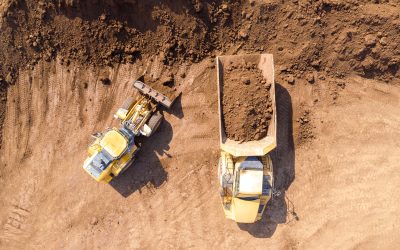

‘Deposit for recovery’ sounds technical, but the idea is simple: using waste as a substitute for non-waste materials to do something useful on land. Examples of recovery operations include a range of activities from restoration of quarries to creating development platforms to engineering noise attenuation bunds.
Recovery is regulated (slightly) differently from waste disposal (landfill). The regulators have a clear set of rules for when an operation can be deemed as ‘deposit for recovery’, and this has to have been agreed through the production and submission of a Waste Recovery Plan (WRP).
A WRP is your way of proving to the Environment Agency (EA) that your project genuinely needs the waste and that the use of that waste will have a beneficial outcome. You must demonstrate that you could and would use non-waste materials if waste was not available. This is known as the substitution test. The WRP must also include:
- What you need the material for and why.
- How much waste you’ll need. This can only be as much as necessary to achieve the design.
- Engineering details, including drawings, cross-sections, final levels, drainage and materials standards.
- Evidence that the use of waste serves a useful purpose
If your plan can’t show a clear benefit, the regulator will likely conclude it as disposal. There are two main routes following successful approval of a WRP. Standard Rules permits are the off-the-shelf option for lower-risk operations. If your scheme is larger, doesn’t meet the locational standard rules, involves trickier waste streams or doesn’t fit those limits, you’ll need a bespoke permit and a more detailed submission.
Either way, you’ll also need to cover risk assessments, waste acceptance procedures and monitoring, especially if you’re near watercourses or sensitive habitats.
A real-world example: Peace Wood Quarry (Huddersfield)
We recently obtained an EA ‘deposit for recovery’ permit to restore a 6.2-hectare active mineral quarry with up to 325,000 tonnes of inert waste. The goal is to return the site to agricultural use.
The permit only allows waste types listed in its approved WRP (mainly soils, stones, bricks, tiles and similar inert materials) and limits annual input to 50,000 tonnes. It also sets out strict waste acceptance procedures, groundwater and gas monitoring, construction quality assurance (CQA) requirements, and final contour levels to ensure the restoration is environmentally safe. It’s a good example of a ‘deposit for recovery’ scheme on a medium scale, with clear conditions on engineering, monitoring and reporting to protect the surrounding area.
Handled correctly, ‘deposit for recovery’ allows you to give waste a second life while cutting down on the use of virgin materials, which is beneficial for improving circularity and sustainability.